The global landscape of telecommunications is currently undergoing its most significant transformation since the invention of the smartphone. As we move further into the decade, the demand for high-speed, low-latency connectivity has shifted from a luxury to a fundamental necessity. Central to this evolution is the implementation of 5G technology, specifically through optimized frameworks known as the 5G FAST Plan.
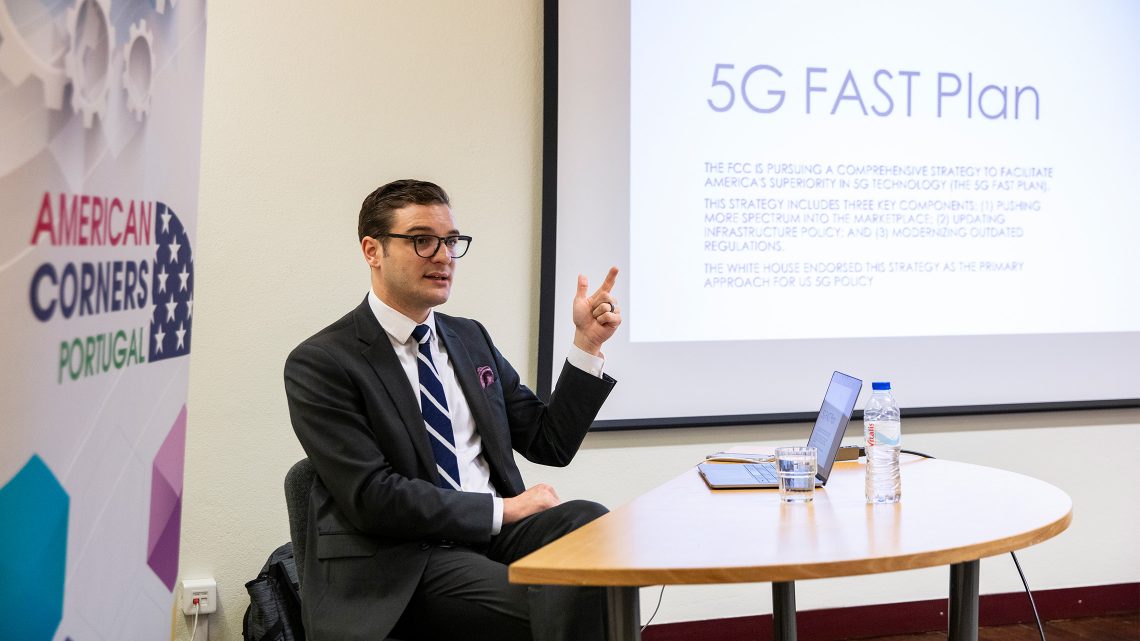
This initiative is not merely about increasing the bars on a mobile phone. It is a strategic roadmap designed to accelerate the deployment of fifth-generation wireless technology. By focusing on spectrum efficiency, infrastructure density. And advanced hardware integration, the 5G FAST Plan aims to redefine how individuals and businesses interact with the digital world.
Understanding the Core Pillars of the 5G FAST Plan
The “FAST” in the 5G FAST Plan is often categorized by three primary objectives: Freeing up spectrum, Accelerating infrastructure. And Streamlining deployment. To understand why this matters for the average user. We must look at the technical hurdles that previous generations of mobile data faced.
In the past, mobile networks operated on crowded, low-frequency bands that traveled long distances but lacked the capacity for high-speed data transfer. The 5G FAST Plan introduces a multi-tier spectrum approach. It utilizes “Low-band” for wide coverage, “Mid-band” for a balance of speed and range. And the revolutionary “High-band” (millimeter wave) for ultra-fast speeds in dense urban areas. By opening these new lanes on the digital highway, the plan ensures that data can travel at speeds up to 100 times faster than 4G LTE.
Eliminating Latency: The End of the Loading Screen
For many users, the most frustrating part of the internet is not the download speed, but the “ping” or latency. This is the delay between sending a request and receiving a response. In a 4G environment, latency usually sits around 50 milliseconds. While this is fine for scrolling social media, it is insufficient for the next generation of technology.
The 5G FAST Plan targets a latency reduction to as low as 1 millisecond. This near-instantaneous response time is the “secret sauce” for several emerging industries. It allows for seamless cloud gaming, where the processing happens on a remote server but the reaction feels local. More importantly, it is the bedrock for autonomous vehicles, which must communicate with traffic lights, sensors, and other cars in real-time to ensure safety.
Infrastructure Revolution: The Rise of Small Cells
Traditional mobile networks relied on massive towers placed miles apart. However, the high-frequency signals used in the 5G FAST Plan are easily blocked by buildings, trees, and even rain. To solve this, the plan emphasizes the deployment of “Small Cells.”
These are compact, low-power base stations that can be mounted on streetlights, utility poles, or the sides of buildings. By creating a dense “mesh” of connectivity, the 5G FAST Plan ensures that users remain connected to high-speed data even in the middle of a concrete jungle. This infrastructure shift also allows for “Network Slicing,” a feature where a single physical 5G network can be divided into multiple virtual networks, each optimized for a specific use—such as one slice for emergency services and another for public Wi-Fi.
Impact on the Internet of Things (IoT)
We are currently transitioning from an internet of people to an internet of things. Our homes are becoming “smart,” with refrigerators, security cameras, and thermostats all requiring a stable connection. The 4G network was never designed to handle thousands of devices per square kilometer.
The 5G FAST Plan provides the massive machine-type communications (mMTC) needed to support up to one million connected devices per square kilometer. This capacity is vital for the development of “Smart Cities,” where sensors monitor air quality, manage waste collection efficiently, and optimize energy usage in real-time. For the consumer, this means a more reliable smart home experience where devices no longer compete for bandwidth.
Economic Transformation and Remote Work
Beyond the technical specifications, the 5G FAST Plan is a powerful economic engine. By providing fiber-like speeds wirelessly, it bridges the digital divide in areas where laying physical cables is too expensive or geographically difficult.
This has a direct impact on the future of work. With a robust 5G connection, high-definition video conferencing and real-time collaboration on massive data files become possible from anywhere. It empowers the “Digital Nomad” lifestyle and allows rural businesses to compete on a global scale. Industries like telemedicine also benefit, as surgeons can perform remote consultations or even robotic surgeries with the confidence that the connection will not drop or lag.
Addressing Challenges and Security
No major technological shift comes without challenges. The 5G FAST Plan requires significant capital investment from telecommunications companies and cooperation from local governments regarding zoning for small cells. Furthermore, as we connect more of our lives to the network, cybersecurity becomes paramount.
The 5G FAST Plan includes upgraded encryption standards and more secure authentication methods than its predecessors. However, because the network is more decentralized due to the use of small cells, the “attack surface” for hackers is larger. Ongoing updates to the FAST plan must include rigorous security protocols to protect personal data and national infrastructure.
Conclusion
The 5G FAST Plan is more than a simple upgrade to our mobile data; it is the foundation for the fourth industrial revolution. By prioritizing spectrum availability and dense infrastructure, it paves the way for a world where connectivity is invisible, instantaneous, and ubiquitous.
As we move forward, the successful execution of this plan will determine which nations lead in innovation, from AI-driven logistics to immersive virtual reality. For the individual, it means a world with fewer barriers, faster responses, and a digital experience that finally keeps pace with the speed of thought. The era of waiting is coming to an end, and the era of the 5G FAST Plan has truly begun.
Would you like me to help you research the specific 5G coverage maps for your current region or perhaps draft a comparison of the best 5G-ready devices currently available on the market?