For the past decade, the concept of the smart home has been largely defined by manual app controls, voice-activated light switches, and internet-connected kitchen appliances. While controlling a thermostat from a smartphone or asking a smart speaker for the weather was initially novel, these features represented a basic evolutionary step: shifting physical buttons onto digital screens.
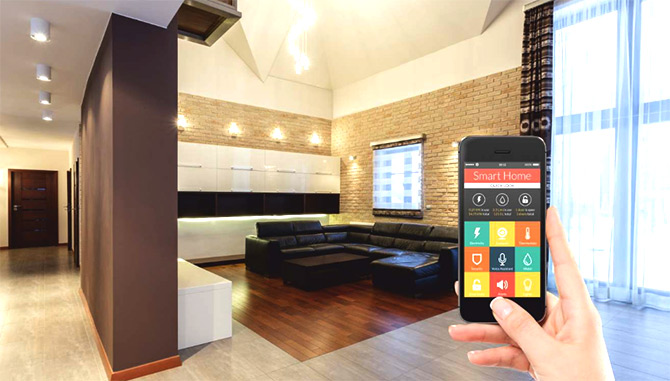
Today, smart home technology is undergoing a major transformation. The industry is moving away from reactive gadgetry toward predictive, unified living ecosystems. Driven by edge artificial intelligence, inter-device interoperability standards, ambient biometrics, and localized data processing, tomorrow’s smart home operates silently in the background—anticipating human needs rather than waiting for explicit commands.
From Connected Devices to Predictive Ambient Intelligence
The primary flaw of early smart home setups was fragmentation. Homeowners were forced to manage dozen separate applications, each tied to a specific brand or hub, creating a cluttered digital experience. Furthermore, every action required an explicit trigger: a tap on a glass screen or a voice prompt spoken across a room.
Modern smart homes bypass this friction through ambient intelligence. By utilizing a network of low-power spatial sensors, acoustic monitoring, and machine learning models running locally on home hubs, the living space learns the daily rhythms, preferences, and physiological habits of its occupants.
Instead of setting a morning alarm that triggers a loud sound, a predictive home coordinates a gradual routine:
- Circadian Lighting Adjustments: Smart window shades elevate slowly in tandem with artificial lighting that shifts from warm amber to cool daylight, naturally regulating melatonin levels.
- Thermal Optimization: The heating, ventilation, and air conditioning (HVAC) system adjusts temperature based on personal sleep cycle stages and local weather forecasts.
- Acoustic Management: Background white noise fades out, replaced by gentle audio feeds or morning news briefings delivered softly in zones where movement is detected.
This shift transforms the smart home from a collection of remote-controlled gadgets into an adaptive, responsive environment that reduces daily cognitive friction.
Interoperability and Localized Edge Processing
Two critical technological shifts have accelerated this home automation revolution: universal protocol standards and edge computing.
Historically, smart home ecosystems were walled gardens. A sensor from one brand could not easily communicate with a lock or light bulb from another. The widespread adoption of unified connectivity standards, such as Matter and Thread, has removed these compatibility barriers. Devices across different platforms can now discover, connect, and communicate with each other locally over a secure, mesh network.
Simultaneously, privacy concerns regarding cloud-based voice recording and camera feeds have driven a shift toward edge computing. Modern smart home hubs process sensor data, voice recognition, and video analytics locally on hardware within the home, rather than streaming raw biometric data to distant cloud servers.
This localized architecture offers two significant benefits:
- Enhanced Data Security: Sensitive physiological metrics, facial recognition data, and daily activity patterns remain confined within the home’s local network.
- Instantaneous Response and Reliability: Local processing eliminates network latency, ensuring that motion sensors, door locks, and lighting respond instantly, even if the primary internet connection drops.
Sustainable Resource Management and Intelligent Energy Grids
Beyond personal comfort, modern smart home technology plays a vital role in environmental sustainability and household energy management. As utility rates fluctuate and environmental awareness grows, homes are evolving into intelligent micro-energy managers.
Integrated smart energy ecosystems continuously monitor power consumption at the circuit level. By combining solar panels, home battery storage systems, and smart appliances, the home autonomously optimizes its energy footprint:
- Load Shifting: Heavy energy tasks, such as running dishwashers, heating water, or charging electric vehicles, are automatically scheduled during off-peak hours or when solar generation is at its peak.
- Grid Interoperability: During periods of high grid demand, smart homes can feed excess battery power back into the municipal grid, generating credit for the homeowner while stabilizing community power supplies.
- Leak and Waste Prevention: Micro-turbines and acoustic sensors inside plumbing lines detect microscopic water leaks before structural damage occurs, automatically shutting off main valves during anomalies.
Through these automated efficiencies, smart home technology reduces utility costs while significantly lowering the home’s overall carbon footprint.
Proactive Home Wellness and Preventive Maintenance
The modern smart home is also expanding into preventive health and structural upkeep. Passive health-monitoring systems integrated into mirror displays, flooring, and air purification networks continuously track environmental air quality, volatile organic compounds (VOCs), humidity, and allergen levels, adjusting filtration systems dynamically.
For aging-in-place populations, non-invasive radar and thermal sensors can track movement patterns, identifying falls or sudden changes in mobility without violating personal privacy with invasive cameras.
From a maintenance perspective, predictive diagnostic sensors attached to essential home machinery—such as HVAC compressors, water heaters, and roofing systems—analyze vibrational patterns and performance degradation. Homeowners are notified of mechanical wear months before a major failure occurs, allowing for routine maintenance rather than emergency repairs.
Conclusion
Smart home technology has evolved far beyond the era of gimmick controls and isolated smart plugs. By combining universal interoperability, localized privacy-first processing, predictive artificial intelligence, and sustainable energy management, the home is becoming an active partner in human well-being. Rather than demanding our constant attention through screens and notifications, the modern smart home operates invisibly, optimizing energy, enhancing personal health, and creating a living environment that adapts seamlessly to the human lives within it.